

Lara Beaches & Sea Turtles
Enchanting beaches and a protected sanctuary for sea turtles
The captivating landscape of Lara
The true charm of Ineia reaches its peak along the shores of Lara. The name “Lara” refers to the entire coastal area (Lara Peninsula), including its two bays,the southern bay of Lara or Loura, as it is also known, the northern bay known as Ammoudi, and the Lara Salt Lake.
These captivating beaches attract selective visitors especially during the summer months who seek peace, unspoiled beaches and renewal.
The fascinating beaches of Lara and Ammoudi attract, especially in the summer months, eclectic swimmers, who seek hours of absolute peace, tranquility and renewal.
Routes to Lara
Lara Beach can be reached via two rural roads leading from the village to the two bays, covering a distance of approximately 9 km.
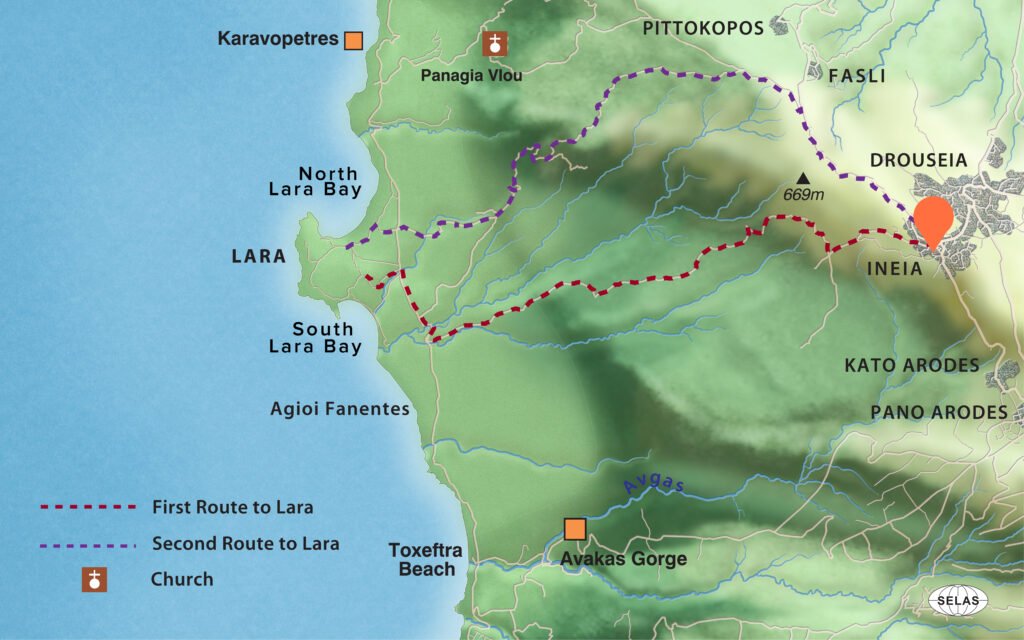
First Route to the beaches of Lara
This route can be a continuation of the Aphrodite thematic route. By following the signposts, the path leads towards Lara.
Alternatively, you can attempt your journey to Lara from the center of the village, after following Lara Avenue and crossing the first stream. About one kilometer further lies the Koraki or Koratzi rock formation.
Following the extension of the Aphrodite route, at its end near the Alykous formation, a descending road continues towards the Pegeia–Lara coastal road.
Following the road signs, and turning right, in less than a kilometre the southern bay of Lara or Loura unfolds before you. It is a horseshoe- shaped cove with a semi-circular, amphitheatrical sandy beach stretching for roughly 1.5 km, lined with low shrubs. Continuing your tour, another kilometre away, leads you to the northern bay of Lara, known as Ammoudi.
Second Route to the beaches in Lara
There is another option for getting to Lara, following Akamas Avenue to the north of the village, which leads to the village of Pittokopos. Then, following the signposts, the road leads to the Pegeia–Lara coastal road.
This road ends at the northern bay of Lara or Ammoudi, where the Turtle Hatchery is located.
Crossing the forest of maquis vegetation, the white sand dunes of the magnificent beach of Ammoudi appear. Here you will also find the Information Center of the Department of Fisheries for the protection of turtles. The sand is fine, mixed with scattered pebbles. In the middle of the beach, dunes about 15 metres high have formed, shaped by wind and water, held in place by umbrella-shaped shrubs. The enormous volume of sand (in Greek Ammos) deposited in this bay justifies the name given to the area, so that no etymological searches are needed.
Ammoudi is perhaps the most secluded sandy beach in Cyprus.Sheltered from strong winds, peaceful and quiet, with crystal-clear waters, it attracts selective visitors especially during the summer.
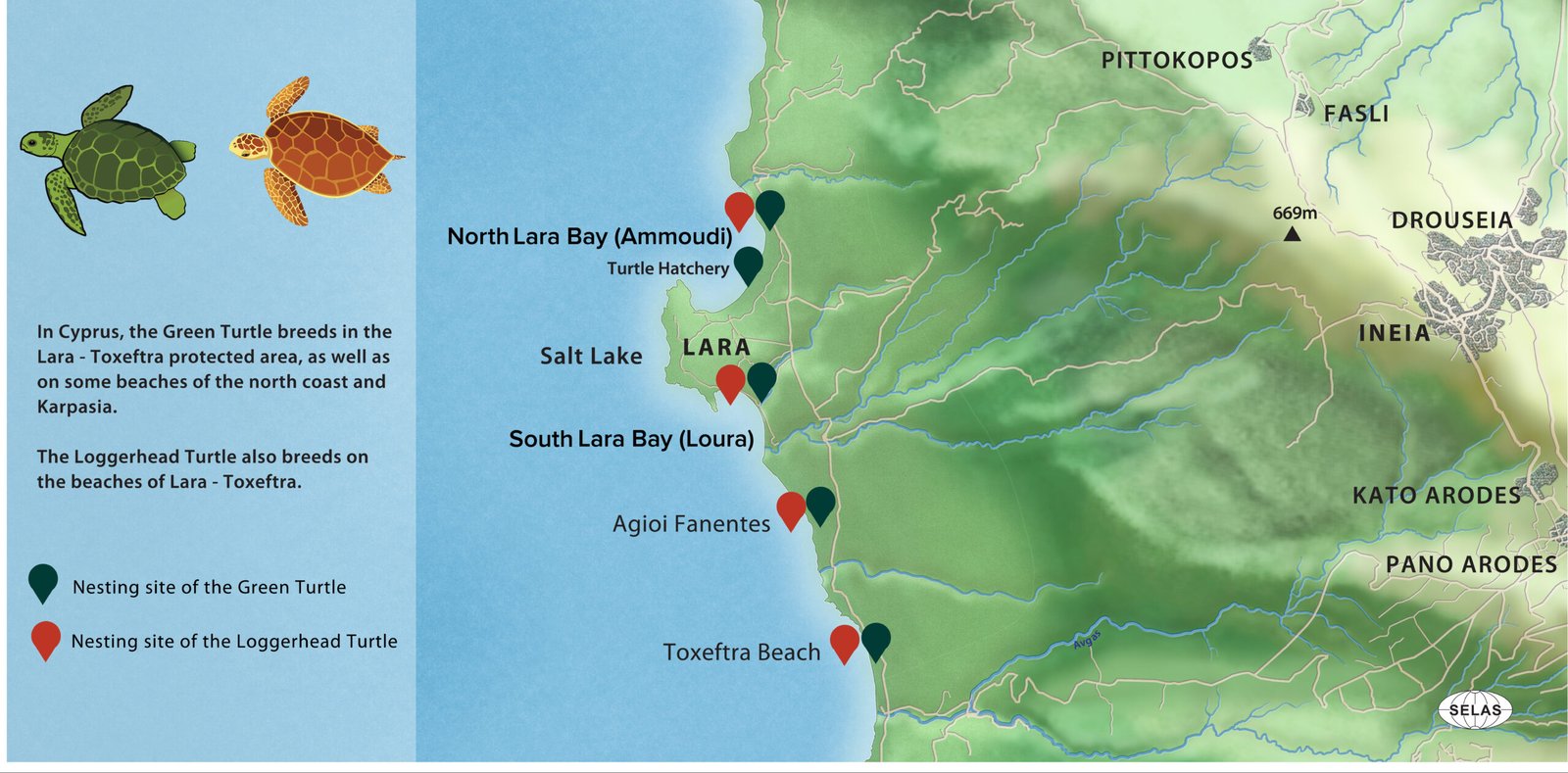
Lara beaches, Sea Turtle Nesting Grounds
Beyond the exceptional beauty of these beaches, they are globally renowned as nesting grounds for two of the world’s seven sea turtle species: the Loggerhead Turtle (Caretta caretta) and the Green Turtle (Chelonia mydas), the Mediterranean’s iconic species.
These turtles specifically choose Lara-Toxevtra beaches for laying and hatching their eggs, making the area a vital nesting habitat. The combination of ecological factors and beach characteristics such as sand temperature, salinity, grain texture, beach length and height, organic content, moisture, wave energy, sand compaction, and local vegetation makes this habitat ideal.
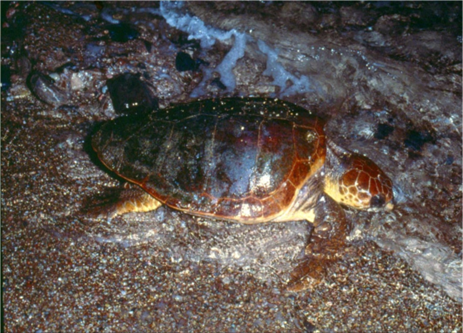
Loggerhead Sea Turtle
The Loggerhead is the third-largest sea turtle species and is classified globally as “vulnerable.” The Loggerhead population visiting Cyprus in summer is estimated at 1,200–1,500 individuals.
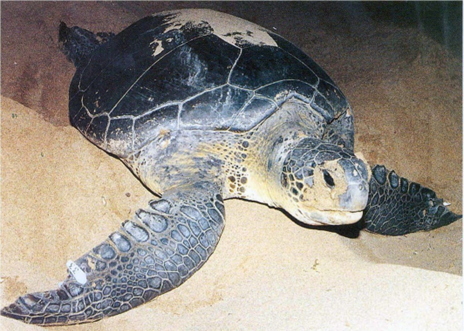
Green Turtle
The Green Turtle is among the largest sea turtles and is classified as “endangered” globally and in the Mediterranean. Its name derives from the greenish color of the fat beneath its shell. The summer population in Cyprus is estimated at 250–350 individuals.
Loggerhead turtles lay eggs from late May to early August, while Green Turtles nest roughly two weeks later. Hatching occurs in about seven weeks, depending on sand temperature. Hatchlings emerge with soft black shells, making them highly vulnerable to predators, which is why they typically hatch at night.
The baby turtles have phototropic behavior, that is, when they leave the nest they head towards the brightest point on the horizon. For this reason, they instinctively head out to sea, using the reflection of the moon or stars on the water’s surface as a guide.
It is estimated that only one in a thousand hatchlings will make it to adulthood and return to the beach where they were born. As hatchlings, sea turtles are exposed to many natural threats, such as crabs, birds and foxes, which patrol the beaches late at night and early in the morning, looking for food. In addition, there are anthropogenic threats, such as unintentional entanglement in fishing gear, marine pollution, especially from plastics, light pollution, noise pollution and beach erosion, especially in nesting areas. These threats, combined with the natural hazards they face, are increasingly reducing sea turtle populations.
Adult turtles are tagged with numbered markers to monitor their return to the same beaches. Nests are protected with cages, and hatchlings are guided safely to the sea when necessary. The nests are protected with special cages. The newborn turtles will return to the beach where they were hatched to mature, to give birth in turn.
If a nest is too close to the water, it is relocated to higher ground. Hatchery staff monitor and document all nests, ensuring stranded hatchlings reach the sea.
If a nest is created near the sea, it is moved to a higher point, so that it is not covered by sea water. After the eggs hatch, the hatchery staff monitor open the nests and record all available data (e.g. unfertilized eggs, etc.), helping any turtles that may have remained cut off in the sand to head towards the sea.
The coastal area of Lara-Toxeftra, home to key turtle nesting habitats, has been protected as a Nature Conservation Area since 1989. The Lara-Toxeftra Marine Protected Area falls within the European Ecological Network Natura 2000 for the long-term safeguarding of endangered species and habitats of nature and in this case the Akamas Peninsula Special Protection Area, which was declared in 2009-2010.
The Municipal District of Ineia, in order to promote the sea turtle, which is hosted on the beaches of Lara, proceeded with the creation of the Ineia-Lara Turtle Museum, dedicated exclusively to these two species.